
A Beginner's Guide to Mindfulness-Based Compassionate Living
You've learned to keep going. To show up. To hold it together — for your work, your relationships, the version of yourself the world sees every day.
And somewhere in all of that doing, a quieter question has started to surface: What about how I treat myself in the process?
If you've heard of MBCL and wondered whether it might be the answer to that question — or if this is the first time you're encountering the term — this post is for you.
MBCL (Mindfulness-Based Compassionate Living) is an 8-week evidence-based program that takes mindfulness one step further: into the territory of self-compassion. In this guide, you'll learn what MBCL is, where it comes from, how it compares to MBSR, and how to know if it's the right next step for you.
What Does MBCL Stand For?
MBCL stands for Mindfulness-Based Compassionate Living. It is a structured, 8-week training program designed to help you develop a warmer, kinder relationship with yourself — especially in moments of difficulty, failure, or pain.
The full name says it all: it combines the foundation of mindfulness (the capacity to be present with what is) with the practice of compassion (meeting what is with warmth rather than judgment). Together, they create a container for a profoundly different inner life.
The Origins of MBCL
MBCL was developed by Dutch mindfulness teacher Frits Koster and therapist Erik van den Brink, drawing on decades of clinical experience and the growing body of research on self-compassion. Their work is documented in Mindfulness-Based Compassionate Living: A Step-by-Step Guide (Routledge), which has become a key reference in the field.
The program was designed as a natural continuation of MBSR — something practitioners could step into after completing the foundational mindfulness training. Over time, it has also found a home as a standalone program for people who feel drawn to the compassion dimension directly.
MBCL integrates elements from:
MBSR (Mindfulness-Based Stress Reduction) — the 8-week foundational mindfulness program developed by Jon Kabat-Zinn
MSC (Mindful Self-Compassion) — the compassion training developed by Kristin Neff and Christopher Germer
Buddhist teachings on loving-kindness and compassion, adapted into a secular, evidence-based format
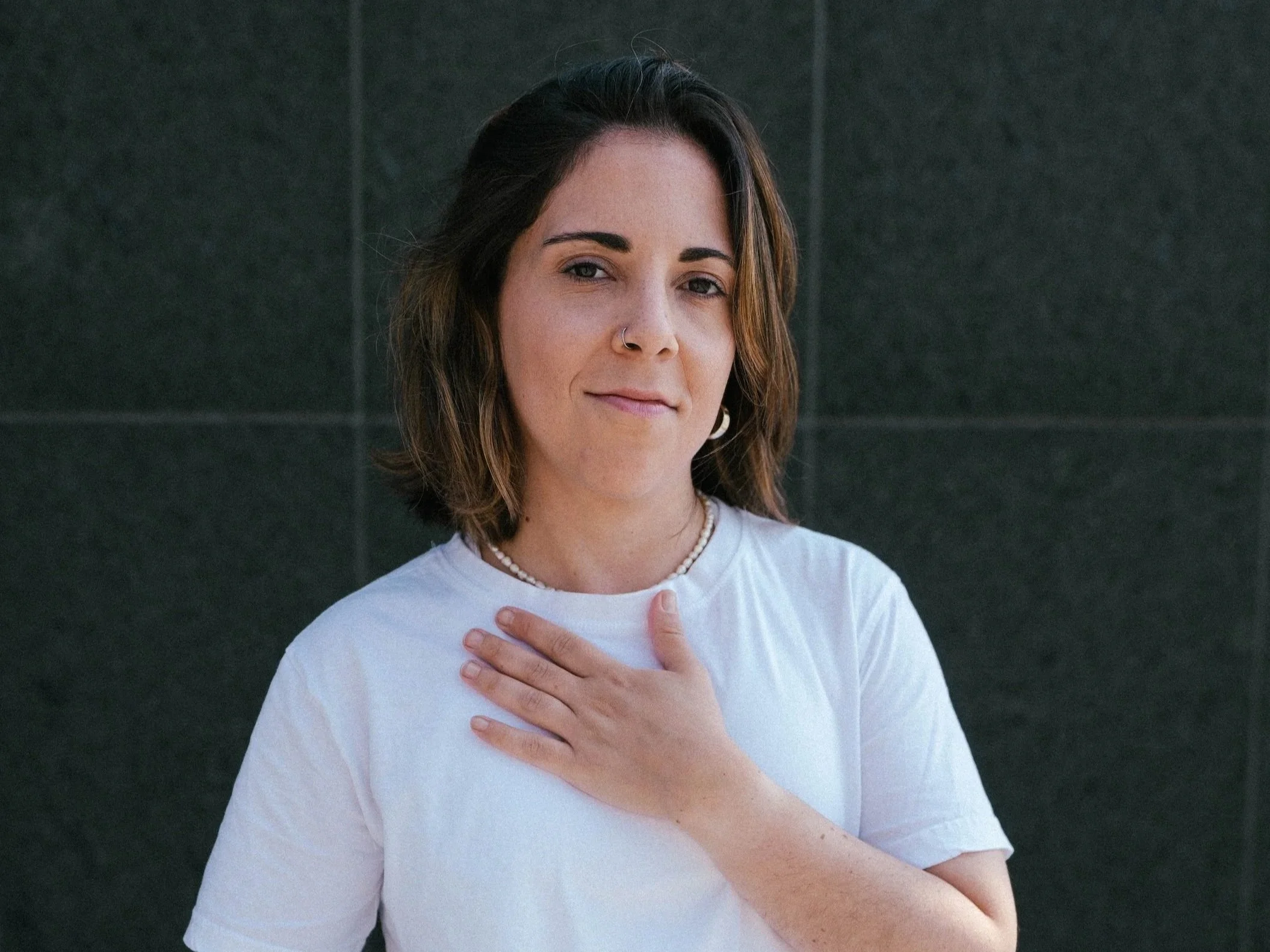
Learning to turn compassion inward is at the heart of MBCL
What Happens in an MBCL Program?
Like MBSR, MBCL unfolds over 8 weekly sessions of approximately 2.5 hours each, plus home practice between sessions.
Each week explores a different theme, building gradually from the ground up:
Week 1 — Why develop compassion? Introduction to the three emotion regulation systems (threat, drive, soothing) and establishing safety.
Week 2 — Exploring Inner Landscapes Identifying threats, the inner critic, and self-compassion.
Week 3 — Treating Habits Kindly Working with old patterns and nurturing a compassionate inner helper.
Week 4 — Embodying Compassion Cultivating a "compassionate mind" and heart.
Week 5 — Self & Others Deepening relationships through "giving and receiving" compassion in every breath.
Week 6 — Growing Happiness Exploring joy, gratitude, appreciation, and forgiveness.
Week 7 — Heartful Mind, Mindful Heart Integrating compassion into daily life and deepening the practice.
Week 8 — The Journey Continues – Reviewing course material and sustaining the practice.
The program includes guided meditations, reflection exercises, and group sharing — all held within a supportive group container.
MBCL vs. MBSR: What's the Difference?
This is one of the most common questions people ask — and it's a good one.
MBSR (Mindfulness-Based Stress Reduction) is the foundational program. Its primary focus is on developing present-moment awareness and working more skillfully with everyday stressors. You learn to notice what's happening in your body, thoughts, and emotions without being swept away by it.
MBCL (Mindfulness-Based Compassionate Living) takes the next step. It builds on that mindfulness foundation and asks: Can you meet what you notice with kindness? The focus shifts from awareness alone to awareness with warmth — particularly toward yourself.
The two programs work beautifully together. Many people complete MBSR and find that MBCL is the natural continuation — the piece that brings warmth to what mindfulness opened up.
If you're not sure which to start with, you're welcome to read more here: What Is MBSR? A Beginner's Guide to Mindfulness-Based Stress Reduction
Who Is MBCL For?
MBCL is for you if:
You're hard on yourself — holding yourself to high standards, struggling with a relentless inner critic
You function well externally but feel disconnected from yourself inside
You've already tried mindfulness (or completed MBSR) and want to take it further
You experience anxiety, burnout, or chronic stress and want tools that address the emotional root
You know how to be kind to others, but find applying that kindness to yourself genuinely difficult
You're drawn to an approach that is evidence-based, structured, and grounded in the body
It is not a therapy program, but it is therapeutic. It won't ask you to analyze your past, but it will invite you to meet yourself in the present — with more gentleness than you may be used to.
What the Research Says
Self-compassion has been studied extensively over the past two decades, and the evidence is compelling.
Research published in peer-reviewed journals has associated higher self-compassion with:
Reduced anxiety, depression, and emotional reactivity
Greater resilience in the face of setbacks and failure
Improved motivation (not reduced — contrary to the common fear that self-compassion leads to complacency)
Better physical health outcomes and reduced inflammation markers in some studies
MBCL specifically has been studied in clinical and non-clinical populations. Findings from multiple studies suggest it produces significant improvements in well-being, self-compassion, and reduced psychological distress over the 8-week period — with effects sustained at follow-up assessments.
A key reference: Van den Brink, E., & Koster, F. (2015). Mindfulness-Based Compassionate Living. Routledge.
What to Expect in an MBCL Online Course
Taking MBCL online makes the program accessible regardless of where you live — something that matters when you're looking for a qualified teacher in a language you feel at home in.
In my live online MBCL course via Zoom, you'll experience:
8 weekly live sessions (2.5 hours each) held in a small, intentional group
Guided meditations adapted to the trauma-sensitive approach I bring to all my teachings
Home practice audio recordings to support your daily practice between sessions
The course is designed for women who are ready to stop outsourcing their sense of worth and start building a relationship with themselves that actually sustains them.
Before you sign up for a full course, you're welcome to meet the practice first.
I have a free guided meditation on Insight Timer that you can try today — no sign-up, no commitment. It will give you a felt sense of the approach I bring to this work.
→ Listen free on Insight Timer
Ready to take the 8-week journey?
The next live MBCL course is open for enrollment. Spaces are limited so the group stays intimate and held.
→ See dates and enroll in the MBCL Online Course
About the author: I'm Paulina, founder of Aha Moments and MBSR and MBCL teacher. I work with women who are highly functional on the outside and struggling on the inside — helping them come home to their bodies and their lives through evidence-based, somatic mindfulness practice. I teach live online and in-person in Germany, in English, Spanish and German.